10/09/2026
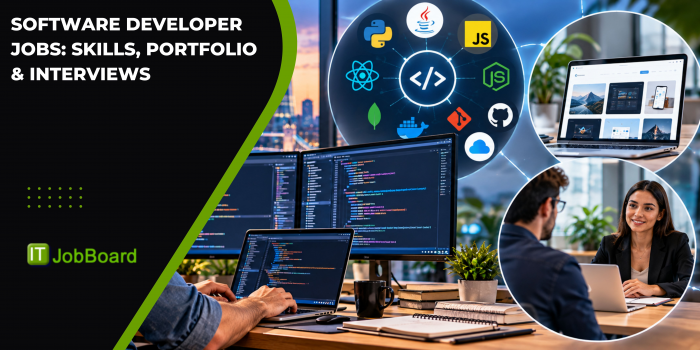
Software Developer Jobs: Skills, Portfolio and Interview Guide
Here's a myth worth retiring today: you must master every language, framework and cloud tool before anyone will hire you.
Hiring managers don't expect that. They want a developer who can learn quickly, write readable code and finish what they start. Think of this guide as a practical map for software developer jobs: what to learn, what to build, and how to show it so the right employers take notice.
What Employers Mean by "Software Developer"
Developer vs. Engineer: Does the Title Matter?
In practice, the two titles overlap heavily. Some companies reserve "engineer" for roles with architecture duties, while "developer" suggests hands-on feature work. Focus on the responsibilities listed, not the label.
Typical Day-to-Day Responsibilities
Expect to write and review code, fix bugs, join planning meetings, write tests and document your work. Communication takes up more of the week than newcomers expect.
Build the Right Skills in the Right Order
Start With Fundamentals
Programming Basics and Data Structures
Learn variables, loops, functions, objects and core data structures in one language. Free curriculum at freeCodeCamp is a friendly place to begin.
Web Foundations
If you're aiming at web roles, the MDN Web Docs are the gold standard for HTML, CSS and JavaScript. Read them alongside your projects.
Add Professional Tooling
Version Control With Git
Every team uses Git. The official Git documentation covers branching, merging and rebasing, which come up constantly in interviews.
Databases and APIs
Learn SQL, then build a small REST API. Many junior assessments ask you to read from or write to a database.
Follow a Roadmap, Not Random Tutorials
A visual guide such as roadmap.sh shows what to study for frontend, backend or DevOps paths so you stop hopping between topics. For a wider view of what employers want this year, read our breakdown of the in-demand IT skills for 2026.
Create a Portfolio That Gets You Noticed
Three Projects Worth Building
- A data-driven app: a budget tracker or booking tool with a real database.
- An API-backed project: consume a public API and add authentication.
- A team-style project: contribute to an open-source repository or collaborate with another learner.
Write READMEs Like a Professional
Explain the problem, show a screenshot, list the tech stack and describe how to run the project. A clear README signals the communication skills employers value.
Add Measurable Details
Mention test coverage, load times or the number of users, even if it's a small number. Specifics build credibility.
Entry-Level and Career-Switcher Paths
Start From Where You Are
Many developers begin in support, QA or analyst roles and move sideways into code. If that's you, browse the Information Technology jobs category to spot stepping-stone positions.
Junior Role Checklist
- A resume focused on projects and impact
- Two or three polished portfolio pieces
- A short, honest summary of what you're still learning
- A professional online presence
Where the Jobs Are
Developer demand is spread across the country. Metro areas such as Chicago, Seattle and Atlanta each host a mix of startups, enterprises and public-sector employers. Remote and hybrid roles widen your options further, so don't limit your search to your own zip code.
Nail the Interview Process
What the Stages Usually Look Like
Recruiter Screen
A short call about your background, salary expectations and availability. Have a clear 60-second summary ready.
Technical Screen or Take-Home
You may solve problems live or build a small feature at home. Treat a take-home like production work: tests, tidy structure and a brief write-up.
Final Panel
Expect a mix of code walkthroughs, collaboration questions and a conversation about how you handle feedback.
How to Talk Through Problems
Narrate your reasoning. Clarify requirements, outline an approach, write the solution, then test it. Interviewers hire people they'd enjoy debugging with.
A 30-60-90 Day Plan for Your Search
Days 1 to 30: Foundations
Pick a target role, finish one core project and polish your resume.
Days 31 to 60: Visibility
Publish your portfolio, contribute to an open-source issue and start applying. Create a profile through Register CV so recruiters can find you.
Days 61 to 90: Momentum
Keep applying, practice interviews weekly and review feedback from every round. Revisit the career advice blog whenever you need fresh tactics.
Keep Moving
The path to developer work is a series of small, visible wins: one project, one polished resume, one conversation at a time. Ready to see what's open right now? Head to the IT Job Board and explore current listings.
What was the biggest obstacle in your own search? Tell us below. Your story might help another reader.
FAQs
What qualifications do I need for software developer jobs?
Employers look for programming skills, problem-solving ability and proof of work. A degree helps in some cases, but projects, certifications and relevant experience can be just as persuasive.
What is the difference between a software developer and a software engineer?
The titles overlap. "Engineer" sometimes implies broader design or architecture duties, while "developer" often emphasises building features. Always judge a role by its listed responsibilities.
How can I get a software developer job with no experience?
Build two or three portfolio projects, contribute to open source, and consider adjacent roles such as QA or support. Tailor your resume to highlight what you've built and learned.
What should a software developer portfolio include?
Include three to five projects with clear READMEs, live demos where possible, a short description of your role, the tech stack and measurable results such as performance gains or user numbers.
Are software developer jobs available remotely?
Yes. Many employers offer remote or hybrid positions, although some require on-site presence. Filter listings by location and work arrangement to find roles that fit your preference.
Related Blogs
-
-
-
-
-
-
-
-
-
-
-
-
-
-
-
-
-
-
-
-
-
-
-
-
-
-
-
-
-
-
-
Cybersecurity Jobs in the USA: Best Roles for Beginners and Professionals
-
-
-