08/25/2026
Cloud Computing Jobs in the USA: Top Roles and Skills for 2026
Cloud is no longer a niche infrastructure skill. It is the foundation for AI, SaaS, cybersecurity, data platforms and modern business applications. This guide explains cloud computing jobs USA candidates should consider in 2026, including top roles, skills, certifications and ways to stand out.
Quick Answer / TL;DR
Cloud computing jobs USA candidates should target include cloud engineer, cloud administrator, DevOps engineer, site reliability engineer, cloud security engineer, solutions architect and platform engineer. Employers look for AWS, Azure or Google Cloud experience plus Linux, networking, automation, Infrastructure as Code, monitoring and security knowledge. Beginners should build hands-on labs and pursue one cloud track first.
Table of Contents
- What Are Cloud Computing Jobs in the USA?
- Why Are Cloud Computing Jobs USA Candidates Still in Demand?
- Top Cloud Roles to Consider in 2026
- Which Skills Matter Most for Cloud Computing Jobs USA?
- AWS, Azure or Google Cloud: Which Should You Learn First?
- Cloud Career Path by Experience Level
- How to Prepare for Cloud Computing Jobs USA
- Cloud Resume Mistakes to Avoid
- How Cloud Roles Connect to AI, Data and Cybersecurity
- Cloud Portfolio Project Ideas
- Interview Questions for Cloud Candidates
- Best Industries for Cloud Computing Jobs USA
- How to Move From IT Support Into Cloud Computing Jobs USA
- What Recruiters Look For in Cloud Resumes
- FAQ: People Also Ask About Cloud Computing Jobs USA
- Key Takeaways
- Call to Action
What Are Cloud Computing Jobs in the USA?
Cloud computing jobs USA employers hire for involve building, securing, operating and optimizing cloud environments. These roles may focus on infrastructure, deployments, cost control, reliability, security, data platforms or cloud architecture.
Cloud jobs vary widely. A junior cloud support role may handle tickets and basic troubleshooting, while a senior cloud architect may design multi-region systems, security controls and migration strategies.
Why Are Cloud Computing Jobs USA Candidates Still in Demand?
Companies need cloud talent because business systems increasingly run on hosted platforms. AI workloads, analytics, remote work, SaaS products and cybersecurity programs all depend on reliable cloud infrastructure.
Employers are also trying to control cloud costs. This creates demand for workers who understand not only how to deploy resources, but how to monitor spending, right-size infrastructure and build secure automated systems.
Top Cloud Roles to Consider in 2026
|
Role
|
Main responsibility
|
Best skills to build
|
|
Cloud engineer
|
Build and maintain cloud environments
|
AWS/Azure/GCP, Linux, networking, automation
|
|
Cloud administrator
|
Manage access, resources and support issues
|
IAM, monitoring, tickets, scripting
|
|
DevOps engineer
|
Improve deployment and delivery pipelines
|
CI/CD, containers, Git, Terraform
|
|
SRE
|
Improve reliability and incident response
|
Observability, SLOs, Linux, automation
|
|
Cloud security engineer
|
Secure cloud infrastructure
|
IAM, encryption, logging, threat detection
|
|
Solutions architect
|
Design cloud systems for business needs
|
Architecture, migration, cost, stakeholder communication
|
|
Platform engineer
|
Build internal developer platforms
|
Kubernetes, automation, templates, developer experience
|
Which Skills Matter Most for Cloud Computing Jobs USA?
The best cloud candidates combine platform knowledge with fundamentals. AWS, Azure and Google Cloud change constantly, but Linux, networking, identity, security, databases, scripting and troubleshooting remain useful across platforms.
Infrastructure as Code is especially important. Terraform, CloudFormation, Bicep and similar tools help teams create repeatable environments instead of clicking manually through consoles.
- AWS, Azure or Google Cloud fundamentals
- Linux command line and systems troubleshooting
- Networking: DNS, subnets, routing, firewalls and load balancers
- Identity and access management
- Terraform or another Infrastructure as Code tool
- Containers, Kubernetes and CI/CD pipelines
- Monitoring, logging, cost management and security basics
AWS, Azure or Google Cloud: Which Should You Learn First?
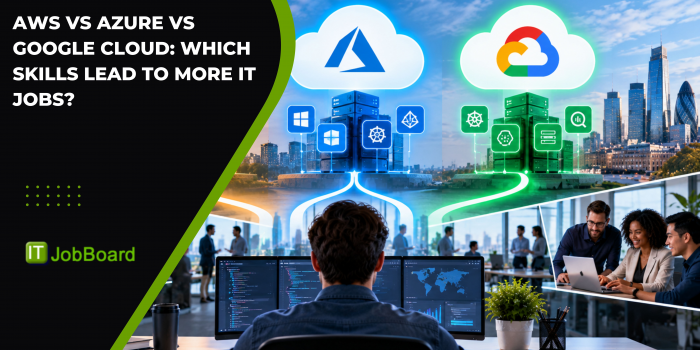
Beginners should choose one platform first instead of trying to master all three. AWS has broad market visibility, Azure is strong in Microsoft-heavy enterprises, and Google Cloud is often connected to data, analytics and AI workloads.
After learning one platform deeply, candidates can add multi-cloud vocabulary. Many job descriptions mention more than one provider, but employers usually prefer strong fundamentals over shallow familiarity with every console.
Cloud Career Path by Experience Level
|
Level
|
Possible roles
|
What to prove
|
|
Beginner
|
Cloud support associate, junior admin
|
Basic cloud services, tickets, labs, documentation
|
|
Early career
|
Cloud engineer, DevOps associate
|
Deployments, automation, monitoring, IAM
|
|
Mid-level
|
DevOps engineer, cloud security engineer
|
Production systems, incident response, cost control
|
|
Senior
|
Solutions architect, SRE, platform engineer
|
Architecture decisions, reliability, stakeholder communication
|
|
Leadership
|
Cloud manager, infrastructure lead
|
Strategy, budgets, governance and team direction
|
How to Prepare for Cloud Computing Jobs USA
- Choose one cloud platform and learn the core services.
- Build a lab project with compute, storage, networking and identity.
- Automate the environment using Terraform or a platform-native IaC tool.
- Add monitoring, logging and basic security controls.
- Document the architecture and decisions in a portfolio page.
- Apply for roles that match your skill level on ITJobBoard.net.
Cloud Resume Mistakes to Avoid
- Listing every cloud service without project evidence
- Ignoring Linux and networking basics
- Skipping security and IAM fundamentals
- Relying only on certifications without labs
- Not showing cost, reliability or automation outcomes
- Applying to senior architect roles without production experience
How Cloud Roles Connect to AI, Data and Cybersecurity
Cloud computing jobs USA candidates should understand that cloud is not isolated from other career paths. AI teams need cloud platforms to run models and store data. Cybersecurity teams need cloud logs, identity controls and secure architecture. Data teams need warehouses, pipelines and orchestration running in the cloud.
This makes cloud a strong foundation skill for candidates who may later move into DevOps, SRE, platform engineering, AI infrastructure, data engineering or cloud security. A cloud project that includes IAM, monitoring, cost control and automation can support several career directions.
Cloud Portfolio Project Ideas
- Deploy a simple web app with a database, custom domain and monitoring.
- Build a Terraform project that creates secure cloud infrastructure.
- Create a serverless image-processing or data-ingestion workflow.
- Set up logging, alerts and access controls for a sample application.
- Document a cost-optimization plan for a small cloud environment.
Interview Questions for Cloud Candidates
Cloud interviews often test fundamentals rather than memorized service names. Be ready to explain how traffic reaches an application, how identity is controlled, how logs are collected, how backups work, how costs are monitored and how you would troubleshoot an outage. Candidates who can explain trade-offs clearly usually perform better than those who only recite services.
Best Industries for Cloud Computing Jobs USA
Cloud computing jobs USA candidates can find opportunities across SaaS, healthcare, finance, government contracting, retail, media, cybersecurity, consulting and AI companies. Each industry emphasizes different cloud needs. Healthcare may prioritize privacy and compliance, while SaaS companies may prioritize reliability, release speed and scalability.
Candidates should tailor resumes to the industry. A cloud engineer applying to financial services should emphasize security, auditability and reliability. A candidate applying to a startup may emphasize automation, ownership and fast execution.
How to Move From IT Support Into Cloud Computing Jobs USA
Many cloud engineers begin in IT support, systems administration, networking or help desk roles. These paths are valuable because they teach troubleshooting, user impact, operating systems and real-world ticket pressure. To move into cloud, candidates should add platform labs, automation and infrastructure documentation.
A practical transition plan is to volunteer for cloud-adjacent tasks at work, such as identity cleanup, backup reviews, monitoring, scripting or migration support. These experiences can become resume bullets even before the job title changes.
What Recruiters Look For in Cloud Resumes
Recruiters reviewing cloud resumes look for provider experience, production context, automation, security and evidence of troubleshooting. A cloud resume should clearly state whether the candidate has worked with AWS, Azure, Google Cloud or lab environments, and it should not exaggerate production responsibility.
Strong bullets mention deployed resources, incidents handled, scripts written, environments supported, costs reduced, monitoring improved or access controls configured. These details make cloud computing jobs USA applications more believable.
FAQ: People Also Ask About Cloud Computing Jobs USA
What are the best cloud computing jobs USA candidates can pursue?
The best cloud computing jobs USA candidates can pursue include cloud engineer, DevOps engineer, SRE, cloud security engineer, solutions architect and platform engineer. The best fit depends on experience and technical interests.
Is AWS enough to get a cloud job?
AWS can be enough for many entry-level and mid-level roles if paired with Linux, networking, security and automation skills. However, Azure or Google Cloud may be better for some employers.
Do cloud jobs require coding?
Many cloud jobs require scripting or automation, but not always full software engineering. Python, Bash, PowerShell, YAML and Terraform are commonly useful.
Are cloud computing jobs remote?
Many cloud roles can be remote or hybrid because infrastructure is managed through cloud consoles and automation tools. Some roles still require on-call rotation or occasional office work.
What certifications help cloud candidates?
AWS Solutions Architect, Azure Administrator, Azure Solutions Architect, Google Associate Cloud Engineer and Professional Cloud Architect can help. Certifications work best when supported by hands-on projects.
Where can I find cloud computing jobs in the USA?
Use ITJobBoard.net to search for cloud engineer, DevOps, SRE, AWS, Azure, Google Cloud and platform engineering jobs across U.S. locations.
Key Takeaways
- Cloud jobs are tied to AI, SaaS, cybersecurity, data and enterprise modernization.
- Learn one cloud platform deeply before going multi-cloud.
- Linux, networking, IAM, automation and monitoring are core skills.
- Projects and documentation make cloud candidates more credible.
- Cloud roles range from support to architecture and leadership.
Related Blogs
-
-
-
-
-
-
-
-
-
-
-
-
-
-
-
-
-
-
-
-
-
-
-
-
-
-
-
-
-
-
Cybersecurity Jobs in the USA: Best Roles for Beginners and Professionals
-
-
-
-